Sofia Müller · 11 September 2026
The Evolution of Community-Driven Development in Virtual Land Platforms
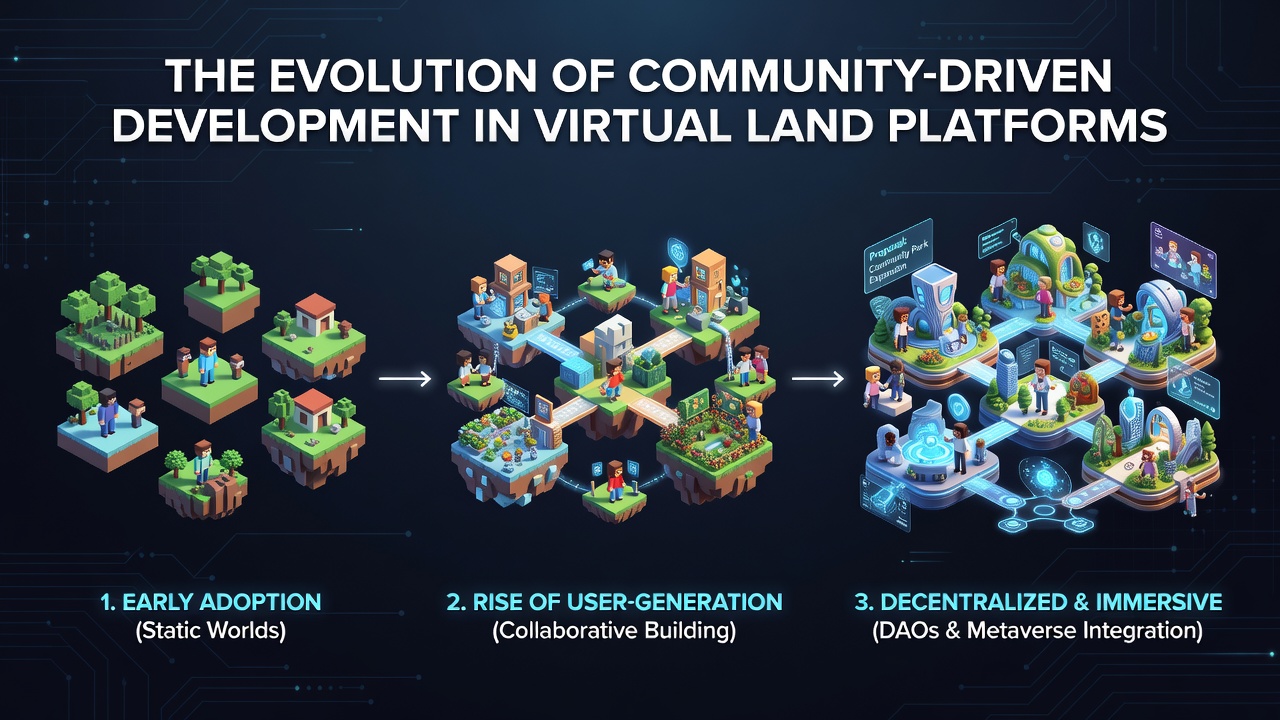
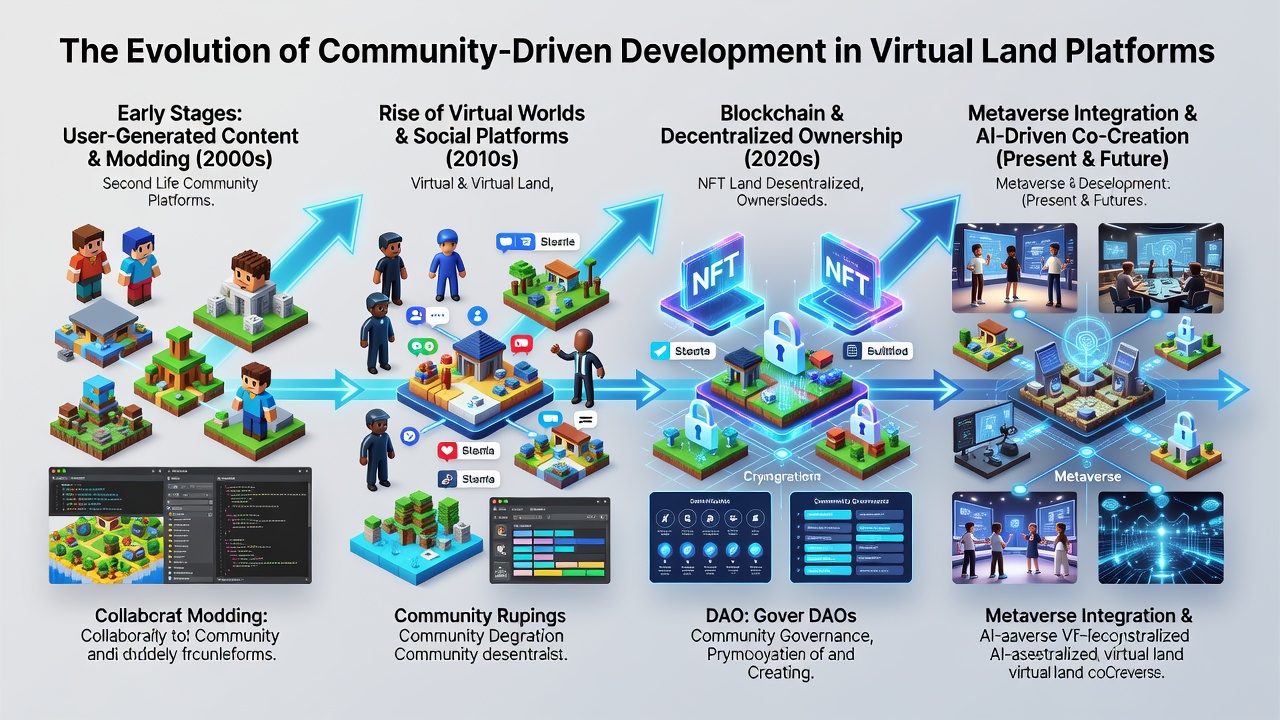
Virtual land platforms emerged in the late 2010s as blockchain-enabled spaces where users could purchase, develop, and trade digital parcels, and community input quickly shaped how these environments expanded beyond initial developer roadmaps. Early projects such as Decentraland and The Sandbox began with centralized teams handling core infrastructure while users proposed features through forums and Discord channels, yet governance mechanisms soon shifted toward token-holder votes that determined land-use rules, event programming, and revenue allocation.
Data from platform analytics firms shows that by 2022 more than 60 percent of new content in leading virtual worlds originated from independent creators rather than platform operators, and this pattern accelerated as smart-contract tooling simplified parcel customization. Researchers tracking transaction volumes note that community-led districts often recorded higher engagement metrics than corporate zones because local builders responded faster to visitor feedback loops.
Foundations and Early Governance Experiments
Initial token sales between 2017 and 2019 funded basic terrain grids and marketplace contracts, after which users formed working groups to standardize building guidelines and asset interoperability standards. Observers recorded that these groups relied on on-chain proposals for decisions such as zoning changes or resource distribution, and participation rates climbed when platforms introduced quadratic voting systems that reduced the influence of large token holders.
One documented case involved a residential district in a prominent platform where residents collectively funded a public plaza through pooled treasury withdrawals; the project completed within four weeks and subsequently attracted consistent foot traffic from neighboring parcels. Such examples illustrated how distributed decision-making shortened iteration cycles compared with traditional game-studio pipelines that required months of internal approval.
Technological Shifts Enabling Broader Participation
Tooling improvements between 2020 and 2023 lowered barriers for non-programmers through no-code editors, template libraries, and cross-platform asset bridges, and usage statistics indicate that monthly active builders doubled in several ecosystems during that interval. Integration with layer-2 scaling solutions reduced transaction fees, allowing smaller contributors to experiment without prohibitive costs, while open-source rendering engines let communities host alternative viewers that supported custom shaders and physics modules.
Academic studies from institutions in North America and Europe have documented how these technical changes correlated with increased land-value variance, as parcels near popular user-created attractions commanded premiums while isolated plots stagnated. Platform operators responded by publishing public APIs that exposed governance parameters, enabling third-party dashboards to surface proposal outcomes and treasury balances in real time.
Developments Through Mid-2026
By September 2026 several platforms had migrated core governance modules to modular DAO frameworks that supported sub-DAOs for individual districts, and adoption metrics released by the Metaverse Standards Forum showed over 140 active sub-DAOs across major networks. These structures handled localized budgets for maintenance, security audits, and seasonal events, while overarching councils retained authority over protocol-level upgrades such as engine migrations or fee schedules.
Figures from industry tracking services reveal that community treasuries collectively controlled assets valued above $180 million at that time, and spending patterns indicated heavier allocation toward educational grants and creator residencies than toward speculative marketing campaigns. Cross-platform collaborations also increased, with builders exporting standardized parcels between ecosystems after compatibility protocols reached version 2.1 in early 2026.
Regulatory Context and Institutional Interest
Government agencies in multiple jurisdictions began publishing guidance on virtual asset classification during 2024 and 2025, and reports from the European Securities and Markets Authority alongside research briefs from the Australian Securities and Investments Commission outlined compliance expectations for platforms hosting user-generated economies. Developers incorporated these considerations into proposal templates, adding disclosure requirements for revenue-sharing models and requiring identity verification steps for large treasury withdrawals.
Industry associations such as the Interactive Digital Software Association coordinated working groups that produced best-practice documents on content moderation and dispute resolution, and several platforms adopted these frameworks voluntarily to maintain access for institutional participants. Academic papers from Canadian and Singaporean universities examined incentive alignment between token holders and long-term platform health, finding that vesting schedules and reputation-weighted voting reduced short-term rent-seeking behavior in tested districts.
Conclusion
Community-driven development in virtual land platforms has progressed from informal suggestion channels to structured governance systems backed by technical tooling and institutional frameworks, and ongoing data collection continues to map how participation patterns influence land utilization and economic outcomes across these environments.