Willa Schwarz · 25 September 2026
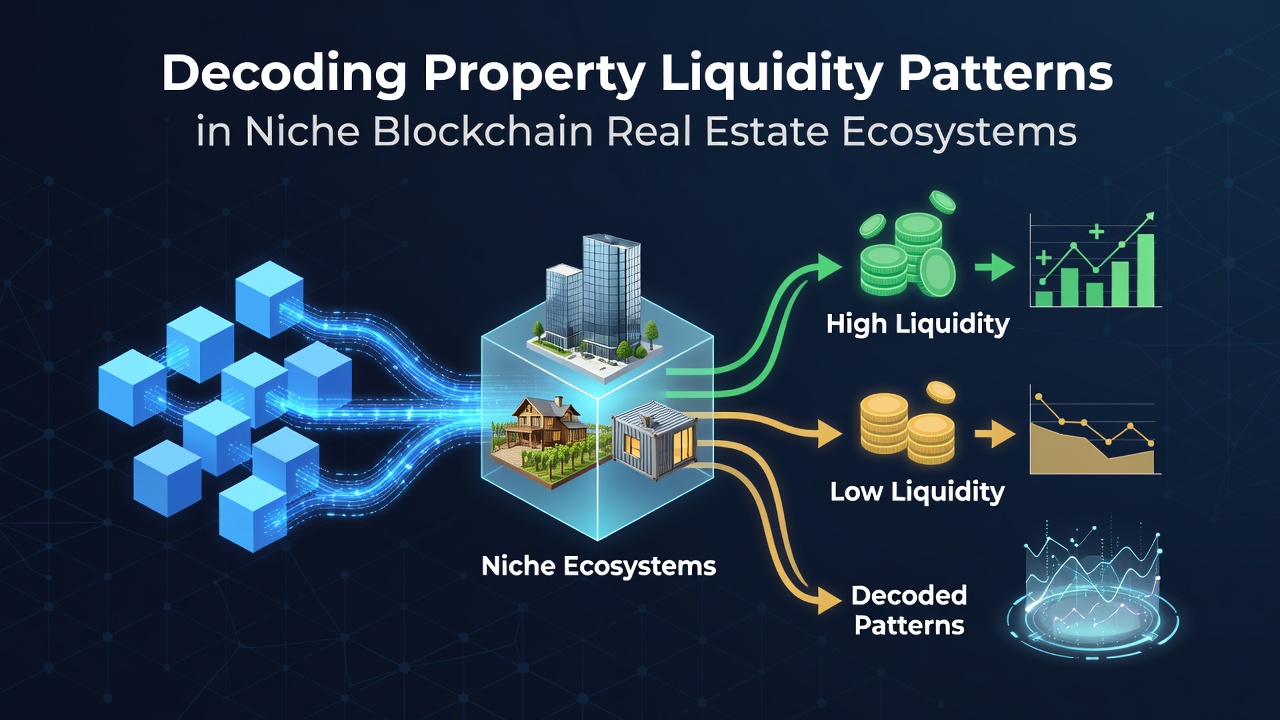
Decoding Property Liquidity Patterns in Niche Blockchain Real Estate Ecosystems
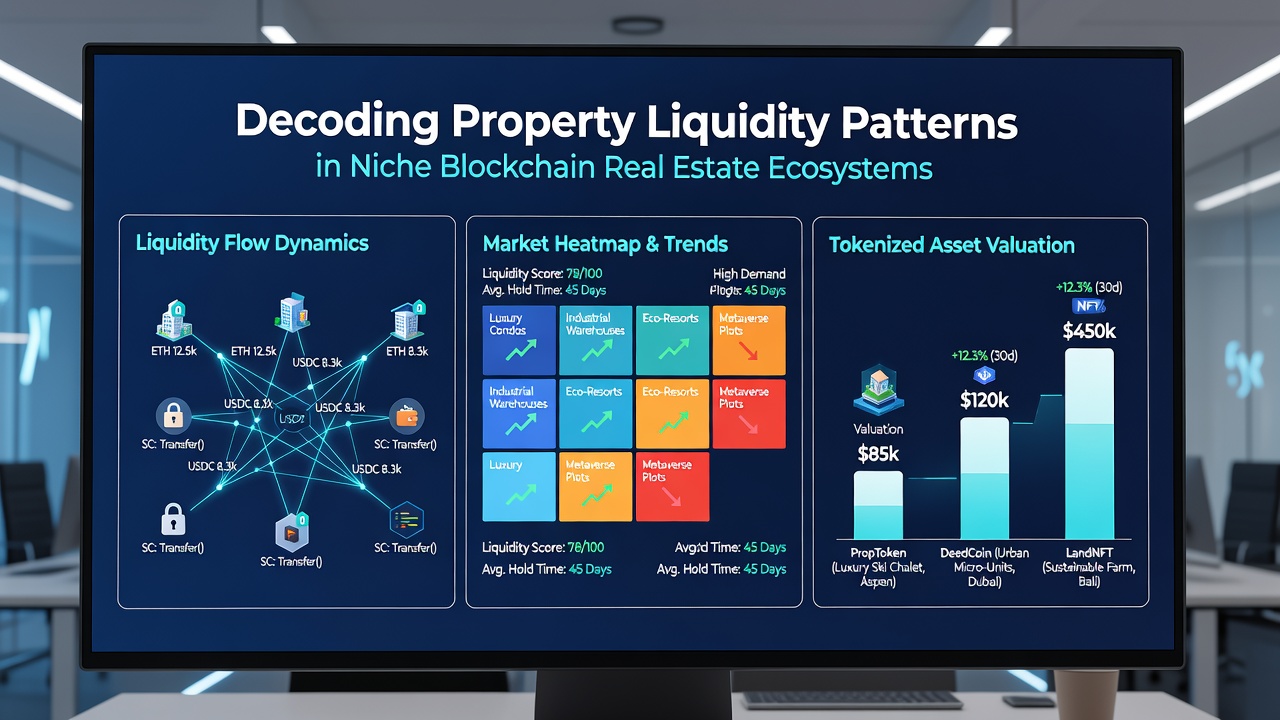
Property liquidity in niche blockchain real estate ecosystems follows distinct patterns shaped by tokenization protocols, platform governance rules, and user participation rates. Researchers track these patterns through on-chain metrics such as average time to sale, bid-ask spreads, and daily transaction volumes recorded across decentralized ledgers. Data from multiple platforms shows that liquidity clusters around high-utility parcels where development rights or revenue-sharing mechanisms create sustained demand, while peripheral assets experience longer holding periods before trades execute.
Core Metrics That Define Liquidity
Analysts measure liquidity through several on-chain indicators that update in real time. Turnover ratio, calculated as total sales volume divided by total asset value, reveals how frequently properties change hands within specific ecosystems. Order book depth on decentralized exchanges tied to these platforms indicates the volume available at current prices without significant slippage. Settlement finality times, which vary from seconds to minutes depending on the underlying blockchain, directly affect how quickly buyers and sellers complete transfers. Studies conducted through 2025 and into September 2026 demonstrate that ecosystems built on layer-2 scaling solutions maintain tighter spreads compared with those operating on base-layer networks that process fewer transactions per second.
Geographic and Platform Variations
Niche ecosystems exhibit different liquidity behaviors based on their target user bases and asset categories. Virtual commercial districts in some metaverse environments attract institutional buyers who favor larger lot sizes, resulting in fewer but higher-value transactions. Residential or experiential parcels, by contrast, draw retail participants who trade smaller units more frequently. Observers note that platforms incorporating revenue-generating features such as advertising slots or event hosting rights sustain steadier liquidity throughout market cycles. Figures released by the European Securities and Markets Authority in mid-2026 highlighted how regulatory clarity in certain jurisdictions correlates with increased cross-border participation and faster order matching.
Seasonal and Event-Driven Patterns
Transaction data reveals recurring seasonal spikes tied to platform updates, token unlocks, and virtual events. During September 2026, several niche platforms recorded elevated trading activity following major protocol upgrades that reduced gas fees and introduced fractional ownership tools. These periods show compressed holding times for assets located near new infrastructure releases, while assets in unchanged zones maintain longer average ownership durations. Researchers compiling longitudinal datasets have documented that liquidity often migrates toward zones with active community governance proposals, because participants anticipate future utility enhancements that could increase asset value.
Influences from External Market Conditions
Broader cryptocurrency market movements transmit into these ecosystems through correlated price action and capital inflows. When native tokens appreciate, new participants enter and provide additional liquidity, narrowing spreads across most asset classes. Conversely, periods of token depreciation coincide with wider spreads and extended time-to-sale metrics. A 2026 report prepared by the Ontario Securities Commission examined how stablecoin integration within select platforms dampens volatility effects, allowing property trades to continue at more consistent volumes even during wider market drawdowns. Platforms that enable direct stablecoin settlement without mandatory conversion steps demonstrate more resilient liquidity profiles throughout these cycles.
Technical Factors Affecting Execution
Smart contract design choices influence how quickly properties reach buyers. Automated market maker integrations paired with property tokens allow continuous pricing, whereas traditional order-book systems require counterparties to exist at each price level. Ecosystems that embed oracle feeds for real-world valuation benchmarks tend to attract more sophisticated traders who rely on external data for decision making. Network congestion events, though less frequent on optimized chains, still create temporary liquidity gaps when transaction queues lengthen. Those monitoring these systems record that liquidity providers often withdraw quotes during high-fee periods, widening spreads until conditions normalize.
Conclusion
Patterns in property liquidity within niche blockchain real estate ecosystems arise from the interaction of on-chain mechanics, platform features, and external capital flows. Continued observation of turnover ratios, settlement speeds, and order depth provides measurable indicators of how easily assets convert to cash under varying conditions. As September 2026 data continues to accumulate, researchers gain clearer longitudinal views of which design choices sustain participation across market phases. These documented behaviors offer reference points for participants evaluating entry and exit strategies within specific ecosystems.